All Projects
(01) Executive Summary
Designing for Rest
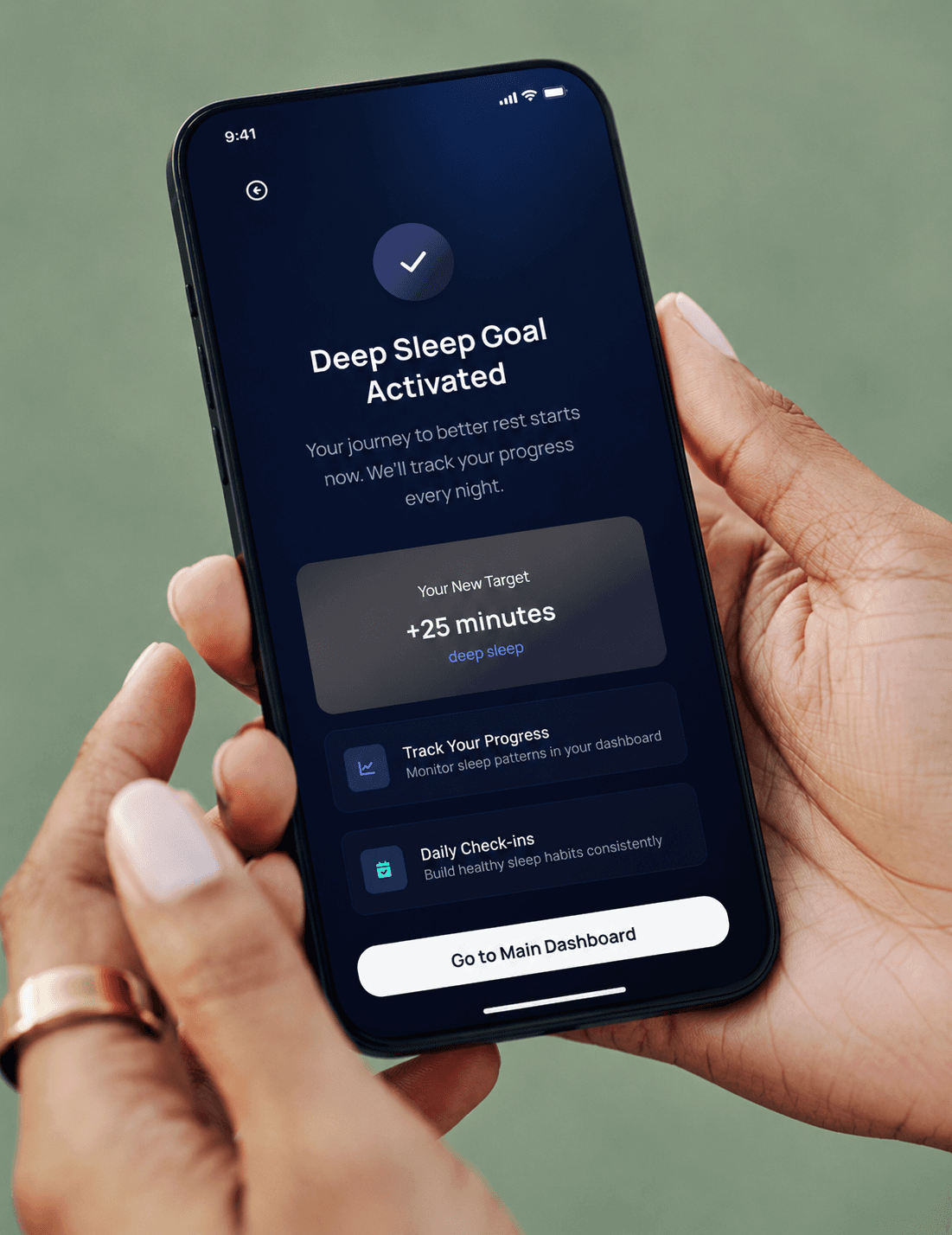
The deep-sleep feature for Oura Ring that turns nightly data into guidance people can act on.
Read the full case study →
Project type
Product Design, Mobile UX, Health & Wellness
Project role
Product Designer, UX Researcher, UI Designer
Date
2024
01
Overview
02
The problem
BARRIER 01 / DIRECTION
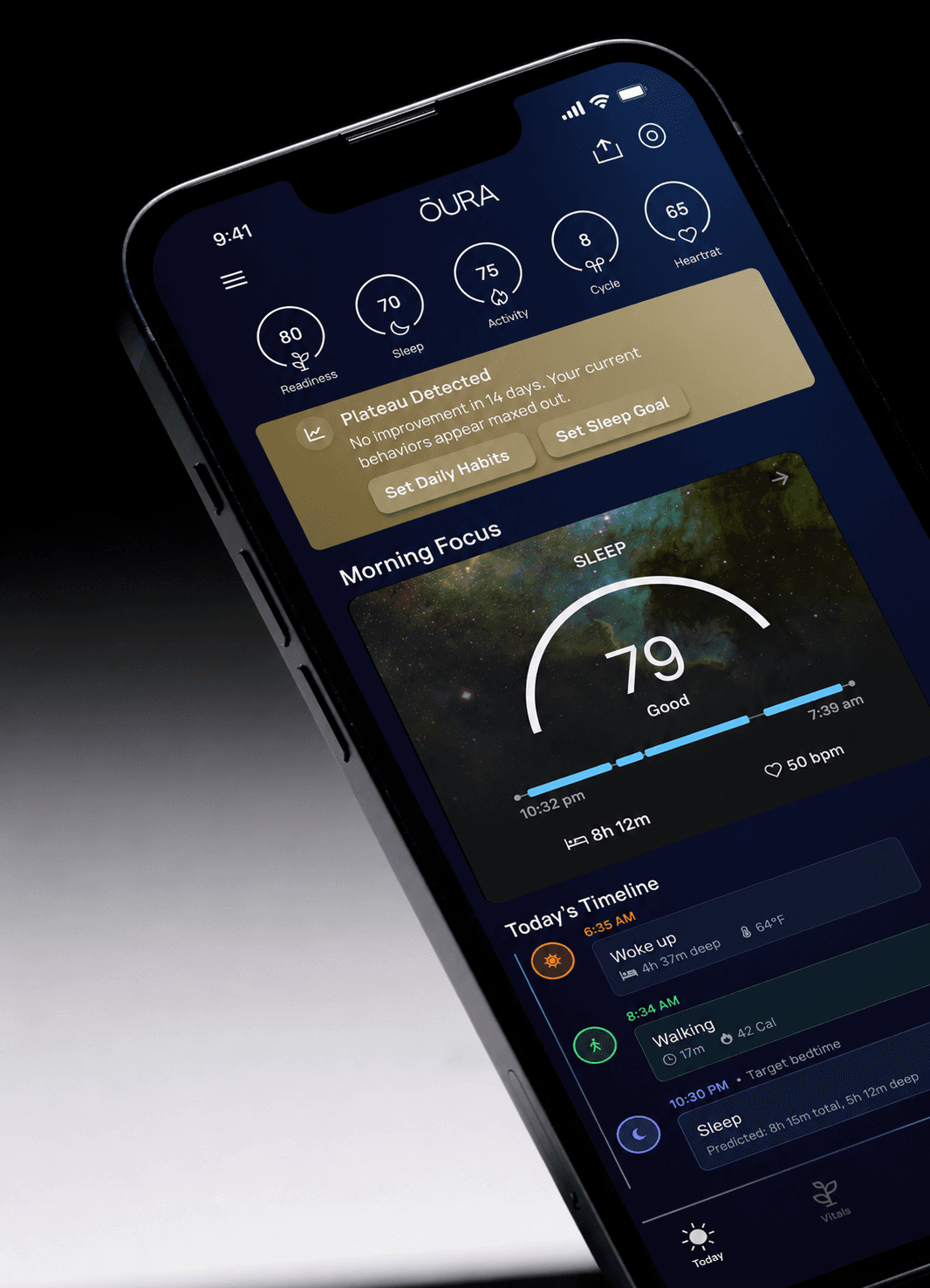
Data without direction
Users saw the score every morning but had no framework for improving it. The number became a verdict, not a guide.
BARRIER 02 / RELEVANCE
Advice that didn’t stick
Generic tips felt disconnected from personal data. Lifestyle tips ranked last in the survey, at 5.9%.
BARRIER 03 / MOMENTUM
No sense of progress
Nothing tracked improvement over time, so users couldn’t tell whether a habit was working before motivation ran out.
03
The solution



04
Impact
Data without direction
Goal flow with a daily cadence
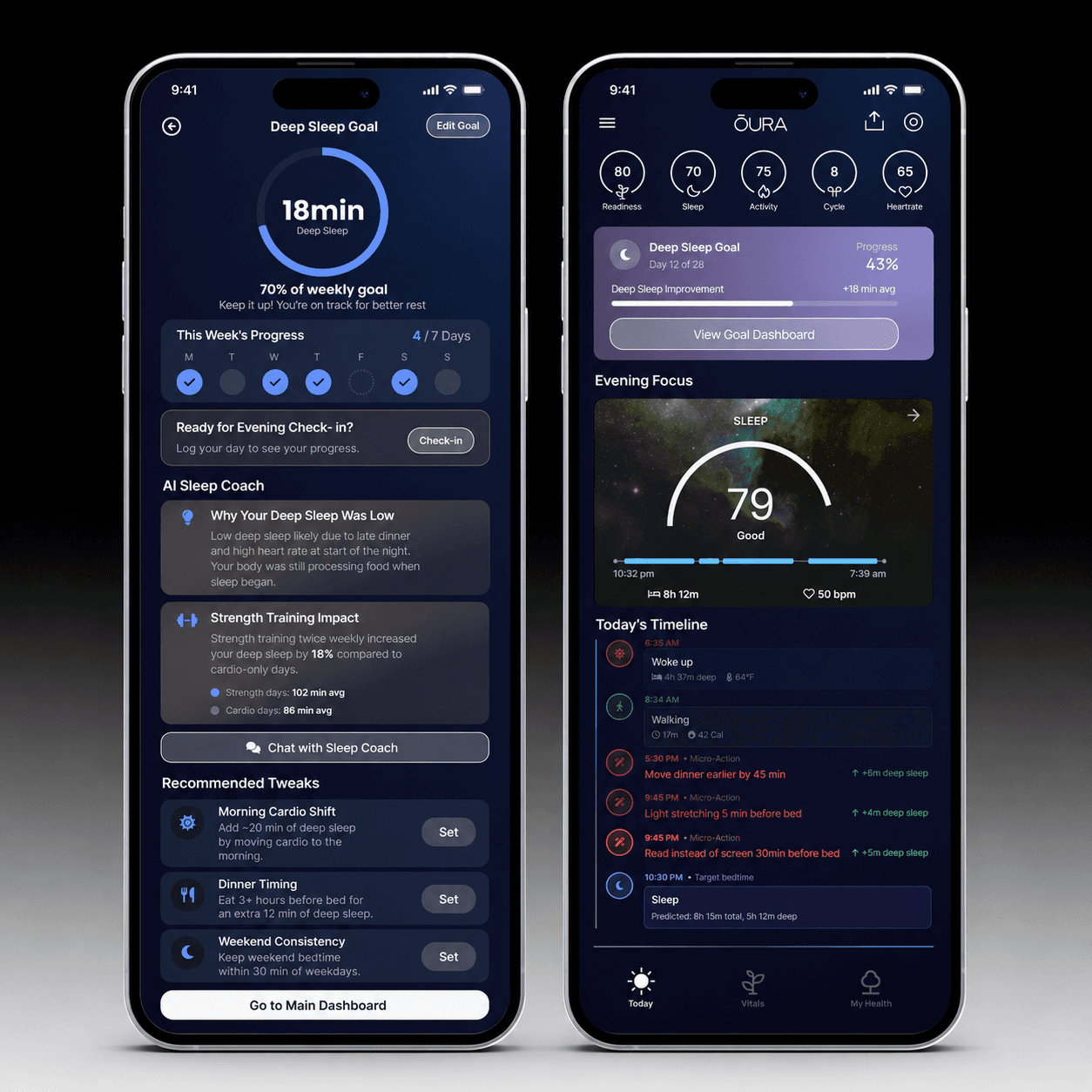
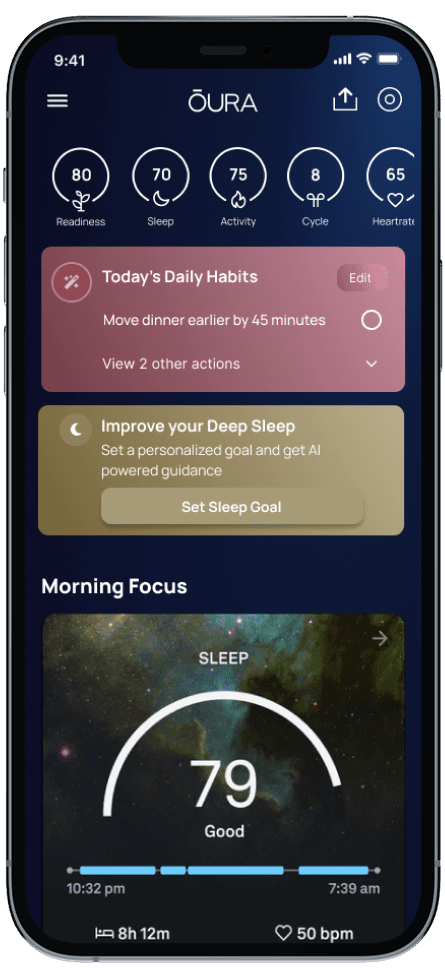
A personalised sleep plan built from the user’s own data, delivered one habit at a time instead of one more chart.
78%
Of interviewees said they wanted personalised guidance, not just numbers.
Advice that didn’t stick
Micro-action language throughout
Plain, specific, time-bound steps that read like a coach rather than a dashboard reporting at you.
5.9%
Ranked lifestyle tips, the most generic option, as what would make data actionable. Last of four.
No sense of progress
Weekly view and evening check-in
Progress markers and mood reflection surface at the moment of day when reflection is natural, light enough to sustain.
Progress
Over perfection: users accepted lower scores when they felt in control of the change.
Usability friction
Hierarchy, tooltips, progressive disclosure
Testing showed users didn’t know where to go next. Simplified screens, clearer terminology and editable choices closed the gap.
5 / 5
Pain points from the first round resolved in the iteration that followed.
Read the full case study →